Setting up a pong table that does not wobble
Half the arguments at a pong table are really arguments about the table. Get the dimensions, the level and the surface right and what is left is a game about throwing, which is the game you wanted.
A pong table is a simple object with four numbers attached, and getting the numbers right removes about ninety per cent of the disputes that a game produces. The other ten per cent are about elbows, and no amount of carpentry fixes those.
The dimensions
- Length 244 cm, eight feet. This is the standard, and it is the length that makes the arc of a shot feel right. A 183 cm (six foot) folding table works in a tight garage and makes the game noticeably easier, so agree before you start whether you are playing a short table.
- Width 61 cm, two feet. Wider tables let cups spread and change the geometry of a rack.
- Height 68 to 76 cm. Ordinary table height. Higher than that and taller players start shooting downward into the cups, which is a different game.
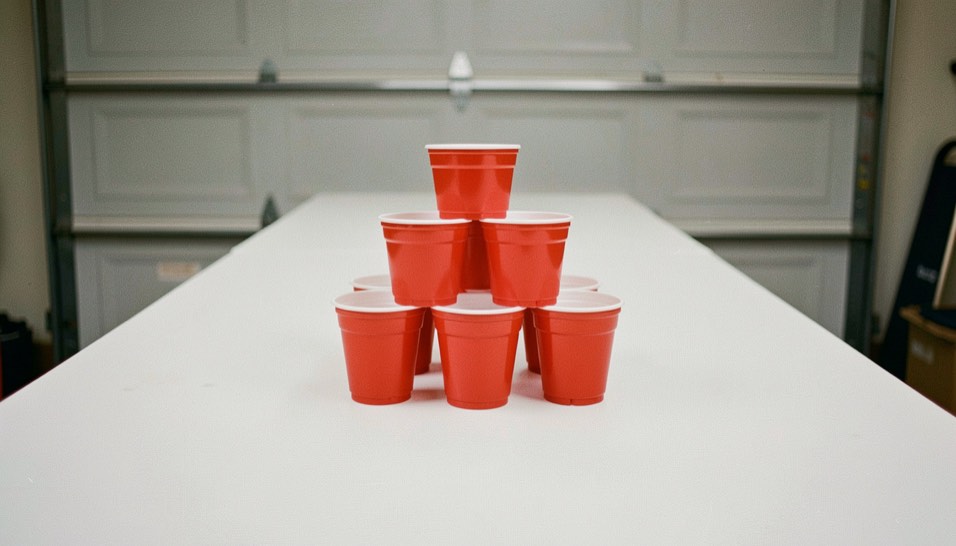
- Ten cups per side, 473 ml (16 oz) party cups, racked in a triangle with the apex pointing down the table at the shooter.
Racking the cups
Set the back row of four across the width, about 2.5 cm in from the end of the table so nothing overhangs, then three, then two, then one. Every cup should touch its neighbours rim to rim. A rack with gaps in it is a rack that shifts every time somebody leans on the table, and then nobody can agree what the formation was.
Fill each cup with a measured amount rather than by eye. Anything from 50 to 80 ml is normal; what matters is that all twenty cups hold the same, because a cup with twice as much in it is a cup people aim away from. A jigger makes this quick, which is one of the arguments in the six tools that actually earn their drawer space.
The sloping floor, and the shim trick
Almost every garage floor slopes. It is poured that way on purpose, with a fall of roughly one to two per cent toward the door so water runs out rather than in. Over the length of an eight foot table that is enough to put one end noticeably lower than the other, and enough to make a folding table rock on two of its four feet.
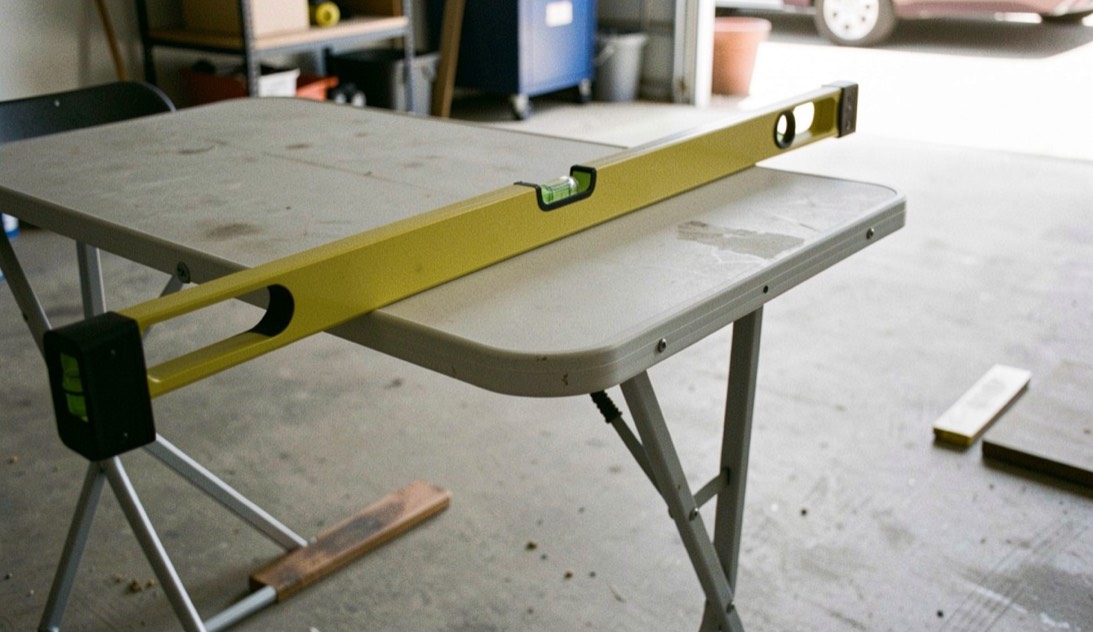
- Set the table where it will be played and put a spirit level along the length, then across the width, then along both diagonals. The diagonals are what catch a twist in the frame.
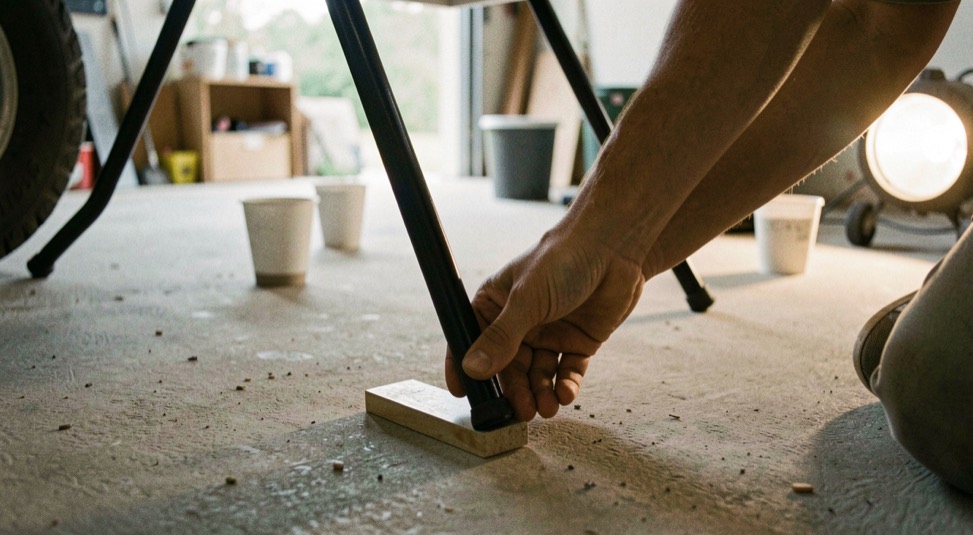
- Find the two feet carrying no weight by pressing each corner in turn. Those are the ones to shim.
- Shim with something that does not compress: cedar shims, offcuts of 3 mm plywood, or a folded strip of hardboard. Folded cardboard crushes within an hour and you will be back on your knees mid game.
- Tape the shims to the feet with gaffer tape so they stay put when the table gets shoved.
- Level again. A table that is level along its length but twisted will still rock.
The surface matters more than the table
Most folding tables have a moulded plastic top with a hollow core. It flexes, it deadens a bounce, and it drums. If your game includes bounce shots, the difference between that surface and a solid one is the difference between a predictable rebound and a dead ball.
Two cheap fixes. A sheet of 12 mm MDF cut to 244 by 61 cm and laid on top gives a true, firm surface and adds useful weight; seal or paint it, because MDF and spilled beer are a poor combination. Or use a hollow core internal door, which is already close to the right size, lighter than MDF and stiffer than a table top.
Whatever the surface, cover it with something wipeable and taut. A loose cloth grabs a rolling ball and stops it dead.
Ball washing, and why two cups
Put a cup of clean water at each end, on the floor or on a side surface rather than on the table where it will be knocked into the rack. One cup per side means neither team is dipping into the other team's water, which is the version everybody prefers by the end of the evening.
Change the water between games. It takes four seconds and it is the single most noticed courtesy at a home table.
The line, the elbow and the reach
Mark the end of the table with a strip of tape on the floor, and agree the rule before the first throw: either the elbow stays behind the end of the table, or leaning is allowed and the game is quicker. There is no correct answer, only a decided one.
Leave at least 1.2 m of clear floor behind each end. Players step back to throw, and a table jammed against a wall means somebody is throwing with their heels against skirting board.
Light it from the side
A single bulb or strip directly above the middle of the table puts the shooter's own shadow across the far rack, and puts a hard glare on the water in the cups. Move the light to the side, or use two lights at the ends. This is the same principle as everywhere else on a home bar, argued at more length in back bar lighting without the glare, and it applies with more force to a dartboard, where the shadow of your own hand falls on the trebles.
Storage
An eight foot table needs somewhere to live. A folding table goes flat against a wall on two brackets. A plywood or door top can hang on the same wall on a pair of cleats, or slide behind a shelving unit. Decide this before you build the top, because a beautifully levelled table that lives in the middle of the garage gets sold within a year.
The same table, later in the evening
A long, level, wipeable table is also the best possible surface for a race, which is why the same garage usually ends up playing the game in Flip Cup: how to run a fair race. The lane marking advice there assumes a table set up exactly like this one.
And when the throwing stops, the table becomes seating overflow and a food surface, which is a role it does badly unless you have thought about where people stand. That is the territory of a twelve person night on a six person table.
Filed under Bar games. Published July 9, 2026.