The six tools that actually earn their drawer space
A home bar collects twenty gadgets and reaches for the same handful every single time. Here is the handful, the sizes that make each one useful rather than decorative, and the three purchases that can safely wait.
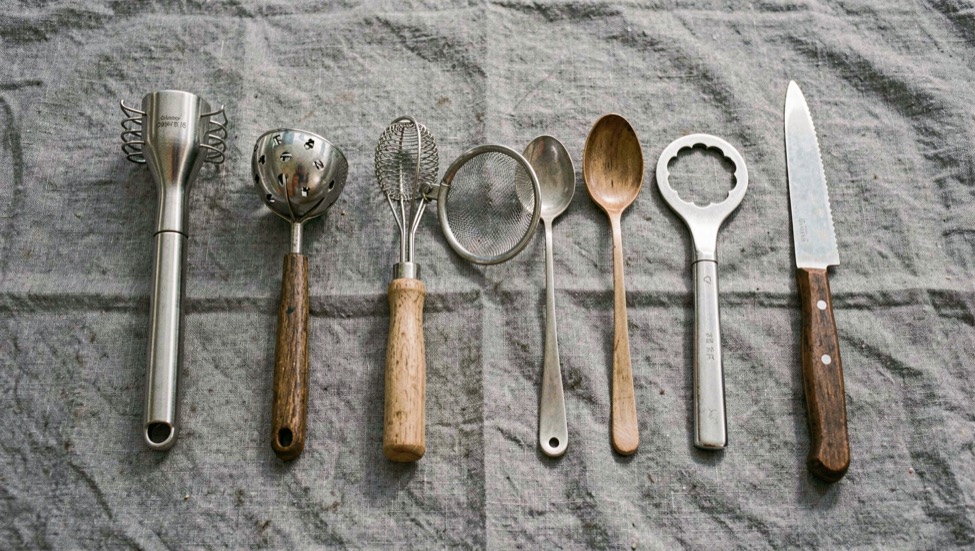
Walk behind a busy bar and count what the person actually touches in an hour. It is a short list, and it is almost always the same list. The gear that fills online starter kits is not wrong so much as premature: it solves problems you do not have yet, while the six things below solve the problems you have on the first night.
Every item here is chosen for one reason: it does a job that something else in your kitchen does badly. If a kitchen tool already does the job well, it is not on the list.
1. A jigger you can read at a glance
A jigger is the only tool on this list that changes how a drink tastes rather than how it is made. Free pouring at home is a lottery, because you are pouring from bottles with different necks into a glass you cannot see through.
Buy a Japanese style double cone, 30 ml on one end and 45 ml on the other, or 25 and 50 ml if you learned in millilitres of the British kind. The important detail is interior lines: a good jigger is marked inside at 15, 20 and 22.5 ml on the small cone, which turns two vessels into six measures. Stainless, thin walled, and tall rather than squat, because a tall cone is easier to fill to the brim without spilling down your wrist.
Avoid the deep two ounce cup with no interior marks. It measures one thing, and one thing is never enough.
2. A bar spoon that reaches the bottom
The twisted shaft is not decoration. You stir by letting the spoon spin between your fingers while the bowl tracks the inside wall of the glass, and the spiral is what lets it turn without effort. A 30 cm spoon suits a standard mixing glass; a 40 cm one is for tall pitchers and for the back of a deep jar of cherries.
The flat disc end is a muddling surface for a single sprig of mint or a sugar cube, which is one of the two reasons a muddler is further down this page than you would expect.
3. A hawthorne strainer with a tight spring
The spring is the whole product. A hawthorne strainer with a slack coil lets ice shards through and produces a drink with a gritty top; a tight one, pushed forward against the tin with your index finger, holds back everything you do not want. Check the spring by stretching it a centimetre: it should snap back audibly.
4. Two shaking tins, not a three piece shaker
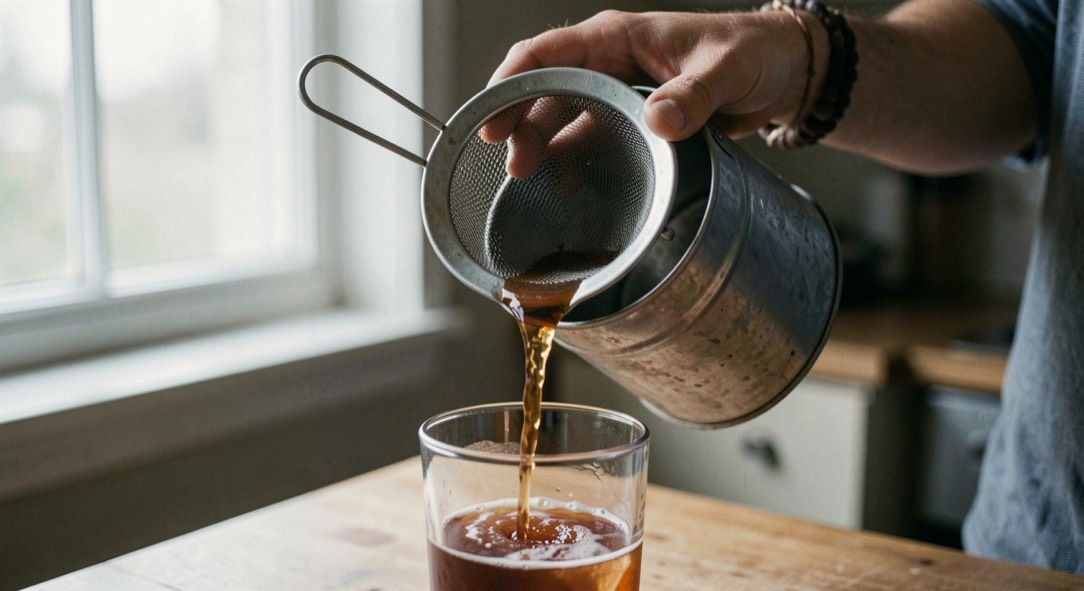
The classic three piece cobbler shaker is the most sold and the least loved object in bar equipment. Its built in strainer is slow, and its cap seizes shut as the metal contracts around the ice. A Boston pair is a 840 ml (28 oz) tin and a 510 ml (18 oz) tin that seal against each other with a tap and break with a slap at the heel of your hand.
Two tins also double as everything else. They are your mixing vessel, your ice bucket for a single serve, and your measuring back up when the jigger is in the sink.
5. A Y shaped peeler
A citrus twist is the cheapest upgrade in drink making, and a swivel peeler makes a poor one: it digs into the pith and gives you a bitter, curling ribbon. A Y peeler pulled across the shoulder of a lemon takes a wide, shallow strip of oil rich zest in one movement. Hold it over the glass, skin side down, and squeeze once before you drop it in.
The same tool shaves chocolate, cheese for a snack board and cucumber ribbons, which is more than the channel knife it replaces will ever do.
6. A flat church key opener
Not a wall mounted one, not a novelty. A flat steel church key opens crown caps, punctures cans and prises lids, costs almost nothing and lives on a hook where everyone can see it. Every home bar loses at least one opener a year, so keep a spare in the drawer and stop mourning them.
The three that can wait
A muddler, because the disc end of your bar spoon handles mint and sugar and a rolling pin handles anything tougher. A fine mesh strainer, until you start double straining shaken citrus drinks and can taste the difference. And an ice ball press, which is a beautiful object that solves a problem better solved by the tray and the technique in ice at home.
Where to keep them
The six tools want to be within one arm movement of where you pour, which usually means a shallow drawer under the counter or an open rail on the wall. Metal on metal in a deep drawer chips plating and blunts edges, so a length of shelf liner cut to the drawer base is worth ten minutes of your time.
Two things sit next to them rather than in the drawer. A folded bar towel, because a wet counter is what makes a home bar look chaotic, and a small cutting board kept only for citrus so your garnish never tastes of onion.
Light matters more than people expect at this end of the counter. A jigger read under a bright downlight throws a shadow into the cone and you will overpour by a few millilitres every time, which is one of the reasons the fittings in back bar lighting without the glare are aimed at the bottles and never at the working surface.
What you clean them with
Everything here is stainless and hand washes in thirty seconds, and none of it goes in a dishwasher with a rinse aid. Rinse aid is a surfactant, it leaves a film, and that film is the same film that flattens a beer head, which is the argument set out in full in washing and storing glassware. Wash the tools with the glassware, in the same clean water, before anything greasy goes near the sink.
Do that and the six tools last for decades. The drawer stays shallow, the counter stays clear, and when twelve people arrive you are not hunting for a strainer, which is the real subject of a twelve person night on a six person table.
Filed under Bar essentials. Published August 18, 2026.