Beer bread, two bowls, one hour
No yeast, no kneading, no proving and no skill. A bowl of flour, a bottle of beer and forty five minutes in a hot oven, which makes it the one piece of cooking that fits inside the hour before people arrive.
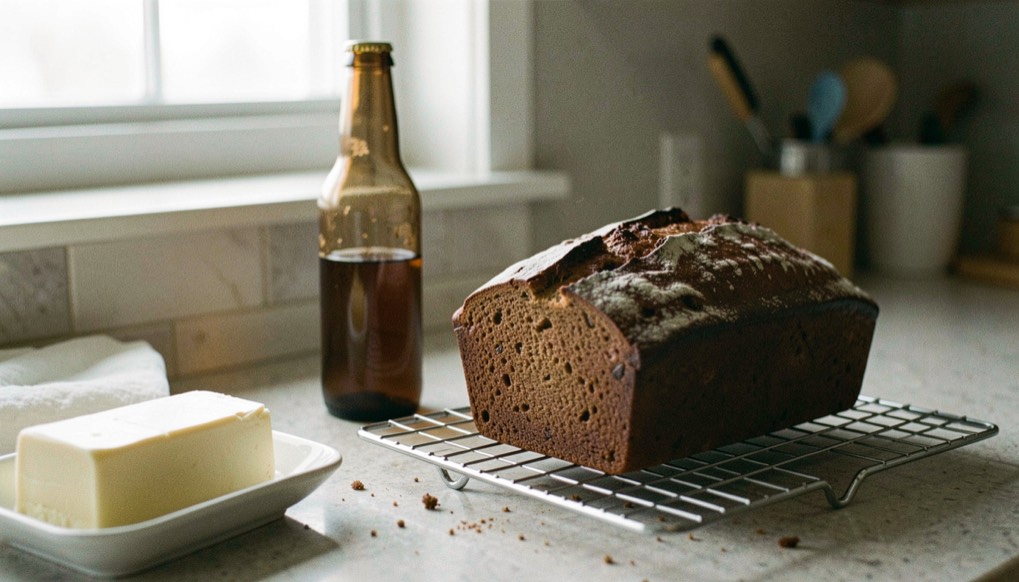
Beer bread is a soda bread with the liquid replaced. The lift comes from baking powder, not from yeast, so there is nothing to prove and nothing to knead, and the whole thing goes from cupboard to cooling rack in about an hour with one bowl of mixing.
It is on this site rather than in a recipe book because of what it does to a party. A warm loaf on a board with butter beside it changes the character of a room in a way that no amount of shop bought snacks does, and it costs almost nothing and no attention.
What you need
- 375 g self raising flour. If you only have plain flour, use 375 g plus 4 teaspoons of baking powder and 1 teaspoon of fine salt.
- 30 g caster sugar. It is not there to make the loaf sweet; it feeds the browning and balances the bitterness of the beer.
- 1 teaspoon of salt, unless you have already added it with the baking powder above.
- 330 ml of beer, at room temperature. One standard bottle or can.
- 50 g of butter, melted.
- A 900 g (2 lb) loaf tin, greased, or lined with a strip of baking paper.
The method
- Heat the oven to 180 degrees fan, or 200 conventional. Grease the tin while it comes up.
- Bowl one: flour, sugar and salt, whisked together dry so the raising agent is evenly distributed. This is the only part where being thorough pays.
- Bowl two: the butter, melted in the microwave or in a pan and set aside.
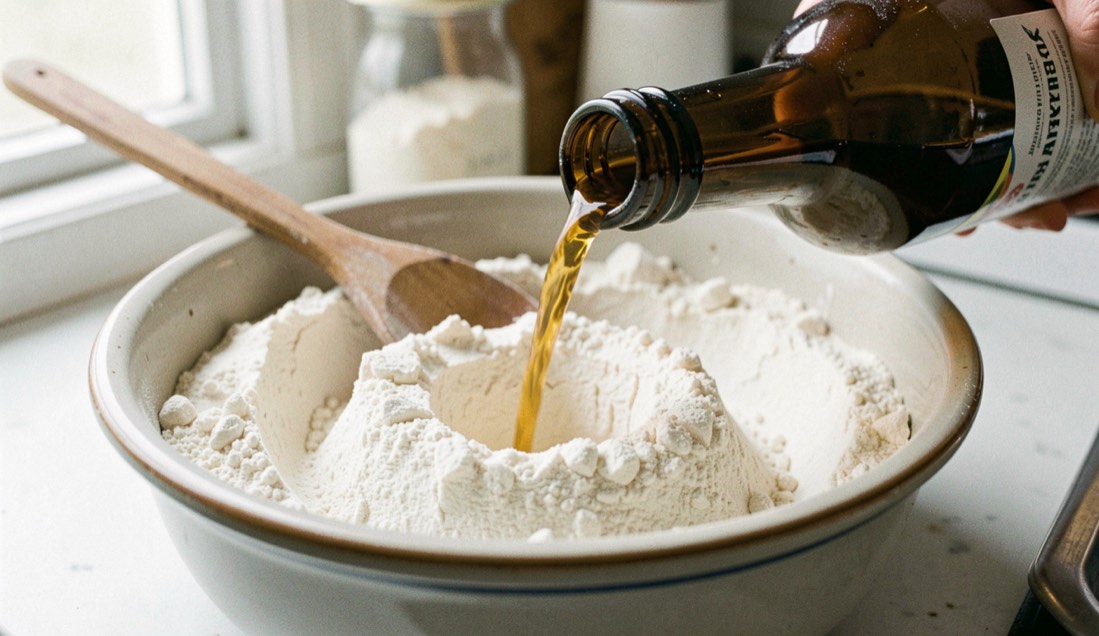
- Pour the beer into the dry bowl and stir with a spoon until there is no dry flour left. Stop there. The batter should be thick, sticky and visibly lumpy. Lumpy is correct; a smooth batter has been overworked and will bake dense.
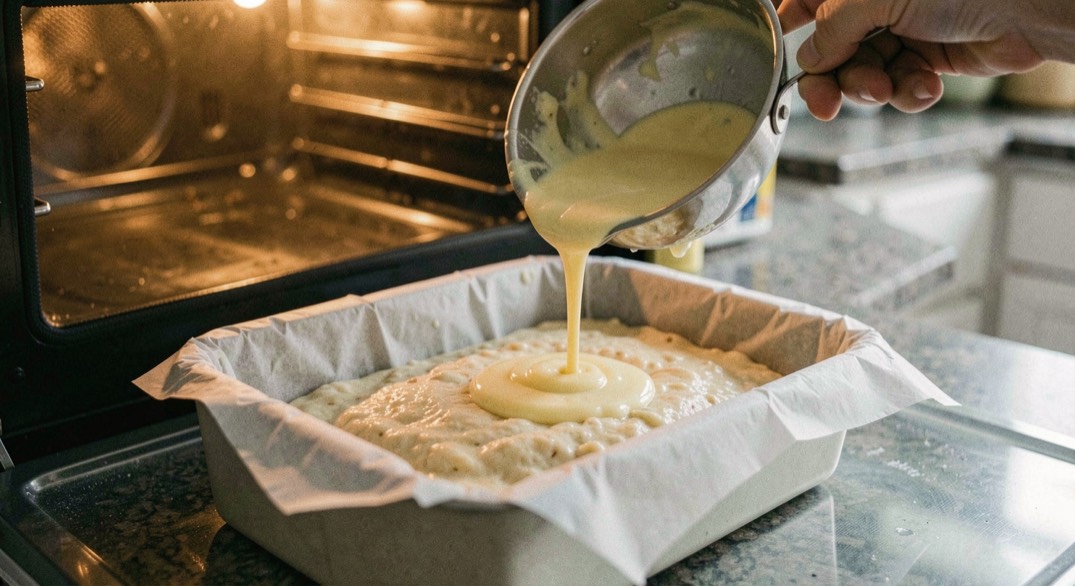
- Scrape it into the tin, level the top roughly, and pour the melted butter over the surface. Do not stir it in. It sits on top, soaks down the sides during baking and gives you the crisp, salty crust that is the best part of the loaf.
- Bake for 45 to 50 minutes. It is done when a skewer comes out clean and the internal temperature is around 96 degrees.
- Ten minutes in the tin, then turn it out onto a rack. Leave it at least twenty minutes before cutting.
What the beer is doing
Two things, and one of them matters less than people assume. The carbonation adds a little lift as the gas expands in the oven, which is real but small; the baking powder is doing most of the work. A flat beer left over from last night makes a perfectly good loaf.
The bigger contribution is flavour. Beer brings malt sugars, a little acidity, and the aromatic compounds from the yeast and the hops, and those survive the oven better than you would expect. That is why the choice of bottle changes the loaf so much, and why it is the first of the three swaps below.
Three swaps
1. Change the beer. A pale lager gives a plain, soft sandwich loaf that anybody will eat. A dark beer, a stout or a dunkel, gives a much darker crumb with a molasses and toasted note, and it is the version that works best alongside cheese. A heavily hopped beer gives a loaf with a bitterness that gets more pronounced as it cools, which some people love and others find unpleasant by the second slice; if you use one, serve the loaf warm and it will be fine.
2. Cheese and mustard. Fold 100 g of grated hard cheese and a tablespoon of mustard powder into the dry bowl before the beer goes in, and keep back a small handful of the cheese to scatter on top before the butter. It makes the loaf a course rather than a side, and it is the version to make if the loaf is the only hot thing you are serving.
3. Oats or wholemeal. Swap 75 g of the flour for rolled oats or wholemeal flour and add an extra 20 ml of beer, because both absorb more liquid. The crumb comes out denser and nuttier and the loaf keeps a day longer. Scatter a few oats on the buttered top.
Serving it at a party
Warm, cut thick, on a board, with salted butter beside it and a knife that stays with the board. Do not pre slice the whole loaf, because the cut faces dry within twenty minutes; cut half, and let people cut the rest.
It fits the standing zone perfectly, because a slice of bread with butter on it is a one hand food and it needs no plate, which is the constraint that governs everything in a twelve person night on a six person table. It is also the right food for a table playing cards, because it leaves no grease on the fingers if you butter it on the board rather than at the table, which is the standing complaint about party food at a game, set out in poker night at home: table, chips, and the first hour.
Timing it around the guests
Mix at the moment the first guest is due, and it comes out of the oven around the point where people have got a drink and are looking for something to do with their hands. If a game is coming later, the loaf and the game land about ninety minutes apart, which is roughly the right rhythm, and the shortlist of games that will actually survive a table with a buttered board on it is in board games that survive a crowded table.
Keeping it
Beer bread is at its best on the day and acceptable on the second, wrapped in a cloth rather than in plastic, which softens the crust you worked for. On the third day it is toast, and it is very good toast, particularly the cheese version.
Freeze half the loaf on the day if you know you will not finish it: cut it in half, wrap it, and it comes back reasonably well from a low oven. It does not come back at all well from a microwave.
Filed under Hosting. Published May 21, 2026.